

What is Website?

A Website is a collection of related web pages available on the internet under a common domain name.
It can provide information, promote products and services, share news, entertain visitors, or allow users to interact and conduct business online.
Websites are accessed through web browsers such as Google Chrome, Microsoft Edge, and Mozilla Firefox. Examples include business websites, educational websites, e-commerce stores, blogs, and social networking platforms.
Types of Websites:
Business Websites: Showcase a company's services, products, and contact information.
E-commerce Websites: Allow customers to browse and purchase products online.
Blog Websites: Publish articles, opinions, tutorials, and informative content.
Educational Websites: Provide online courses, learning materials, and educational resources.
Portfolio Websites: Display an individual's skills, projects, and professional achievements.
News Websites: Share current events, reports, and updates.
Social Networking Websites: Help people connect, communicate, and share content.
Types of Website?

A Dynamic website is a website that can display changing content and provide interactive features based on user actions, stored data, preferences, or other conditions. Unlike a basic static website, a dynamic website can generate or update content automatically using technologies such as JavaScript, server-side programming, and databases.
Dynamic websites are widely used by businesses, e-commerce stores, social networking platforms, online learning portals, and web applications that require frequent updates or personalized experiences.
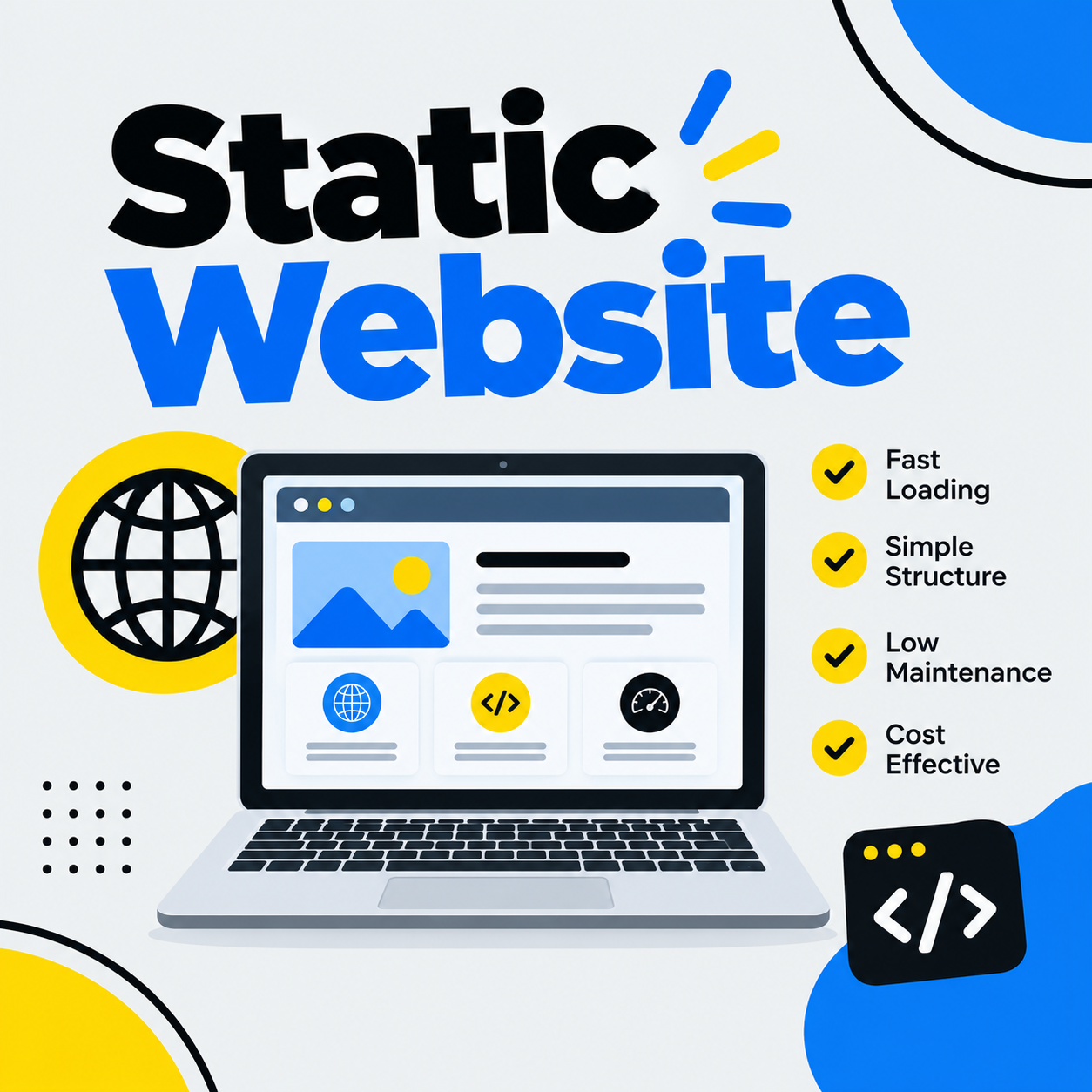
A Static website is a website made up of web pages that display fixed content to visitors. These pages are usually created using HTML and CSS, with JavaScript added for interactive features. The content generally remains the same for every visitor unless a developer manually updates the website files.
Static websites are simple to develop, fast to load, easy to host, and often more affordable to maintain than websites that rely on complex server-side systems.
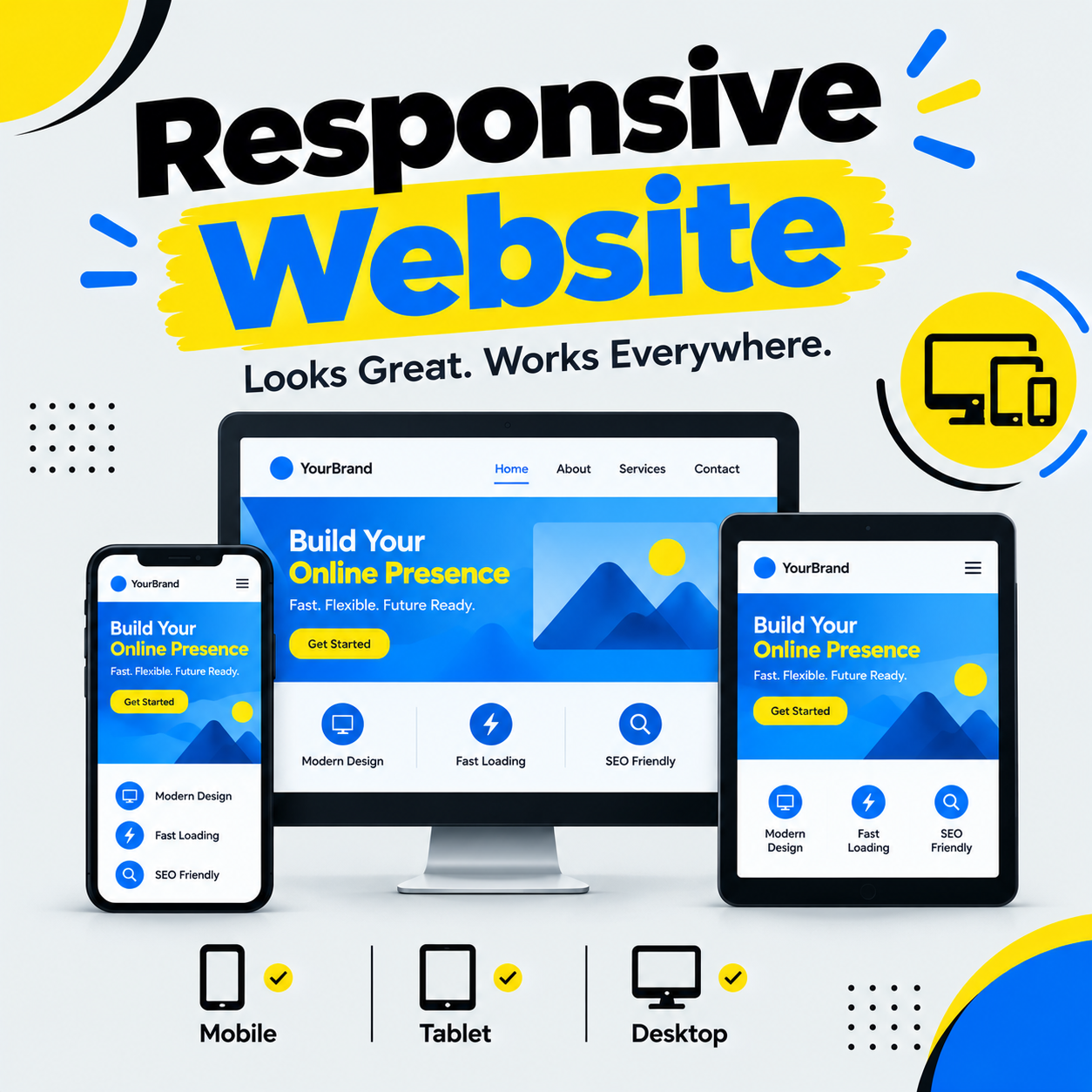
A Responsive website is a website designed to automatically adjust its layout, images, text, and other elements to fit different screen sizes and devices, including smartphones, tablets, laptops, and desktop computers.
Responsive web design ensures that visitors can easily read content, navigate pages, and interact with website features without needing to zoom in or scroll horizontally. It is an important part of modern website development because it improves user experience and supports mobile-friendly browsing.
Function Of Domains
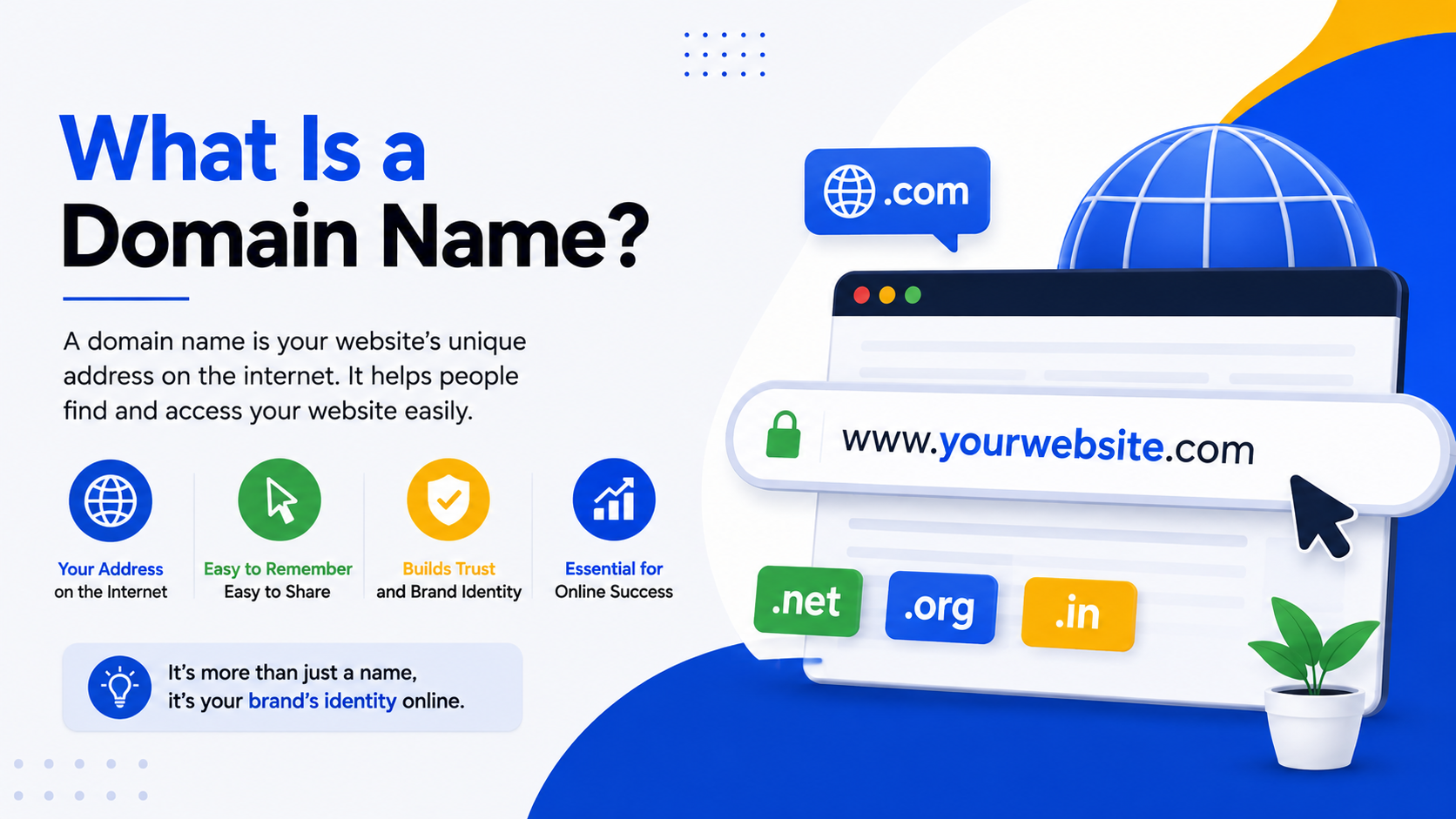

A Domain Name is the unique, easy-to-remember address people use to access a website on the internet. Instead of typing a complex numerical IP address, users can enter a domain name into a web browser to visit a website.
For Example, google.com is a domain name that helps users access Google's website. Domain names are an essential part of website development because they establish an online identity for individuals, businesses, and organizations.
Examples of Domain Names
google.com – Search engine
amazon.com – E-commerce website
wikipedia.org – Online encyclopedia
microsoft.com – Technology company
example.in – Example of an Indian domain name
Domain Hosting is a service related to managing a domain name and connecting it to the services needed for a website or professional email.
In everyday usage, the term can refer to domain registration and DNS management, while web hosting is the service that stores website files and makes them accessible on the internet.
For example, if you create a website for your business, you might register a domain such as mybusiness.com and purchase web hosting to store your website's images, pages, and other files.
Types of Domain and Hosting:
ServicesDomain Registration: Allows you to register a domain name, such as .com or .in, for a specified period.
DNS Hosting: Manages the Domain Name System records that direct visitors to your website and email services.
VPS Hosting: Provides a virtual server with allocated resources and greater control.
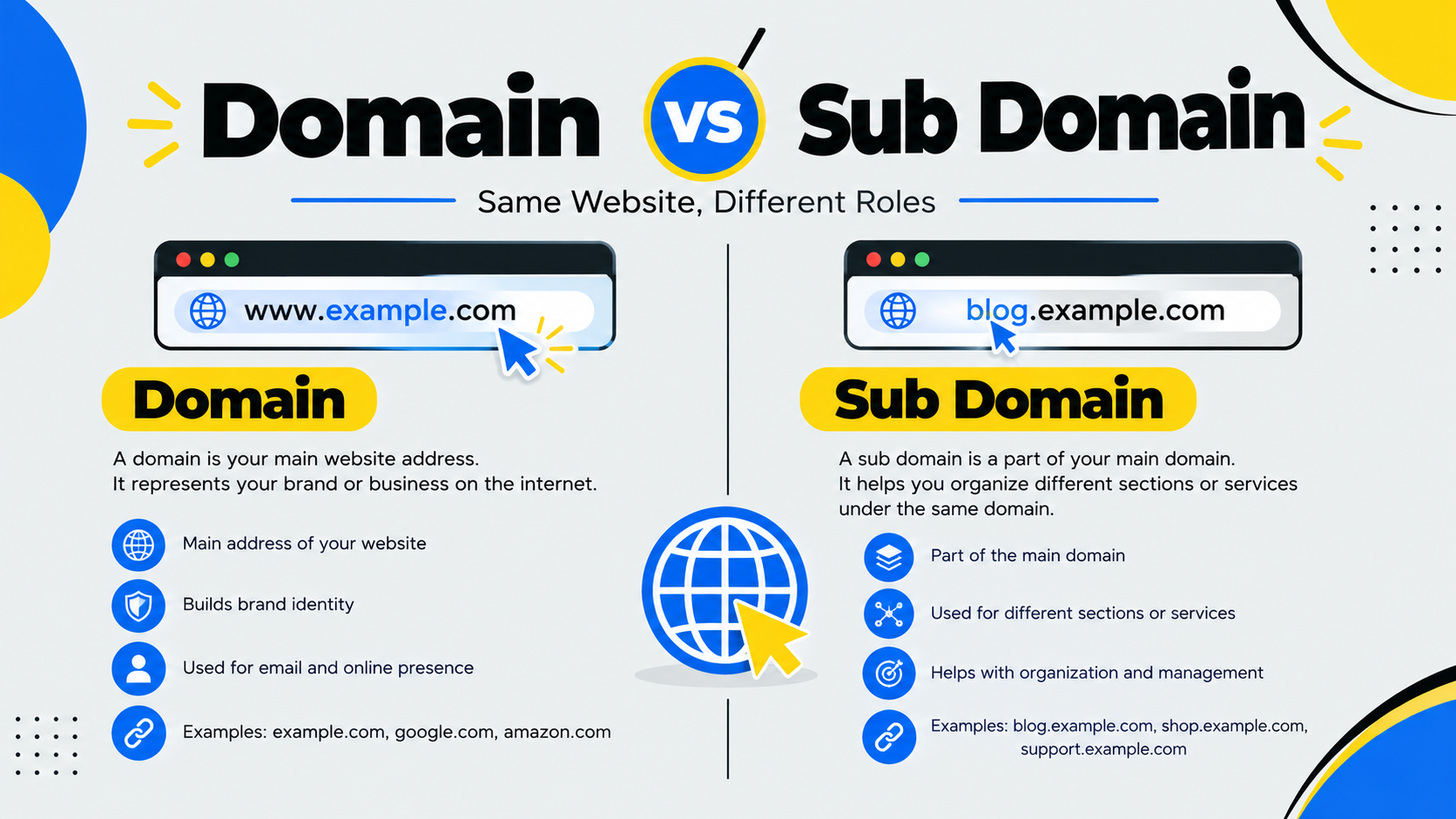
A Domain is the main address of a website on the internet, while a subdomain is an additional section of that domain used to organize different services, content, or functions.
For example, in example.com, the domain is example.com. In blog.example.com, the subdomain is blog, which operates under the main domain example.com.
Both domains and subdomains help businesses build an online presence and organize their websites effectively.
Examples of domains:
google.com, amazon.com, microsoft.com, example.in.
A Subdomain is a part of a main domain that can be used to create a separate section or service within the same domain name.
Examples of subdomains:
blog.example.com — for blog articles.
shop.example.com — for an online store.
support.example.com — for customer support.
learn.example.com — for educational resources.
URL (UNIFORM RESOURCE LOCATOR)
A URL (Uniform Resource Locator) is the web address used to locate a specific resource on the internet, such as a webpage, image, video, or document. It tells a web browser where a resource is located and how to access it.
For example, https://www.example.com/blog is a URL that directs users to a blog page on a website.
URLs are important in website development, digital marketing, and search engine optimization (SEO) because they help users and search engines find and understand web content.
Main Components of a URL:
Example URL https://www.example.com/blog?topic=seo
1. Protocol — https://
Specifies how the browser communicates with the website.
HTTPS encrypts the connection.
2. Subdomain — www
An optional prefix used to organize or access a website.
3. Domain name — example.com
The main address of the website.
4. Path — /blog
Identifies a particular page or resource on the website.
5. Query string — ?topic=seo
Passes additional information to the website, such as search terms or filters.
